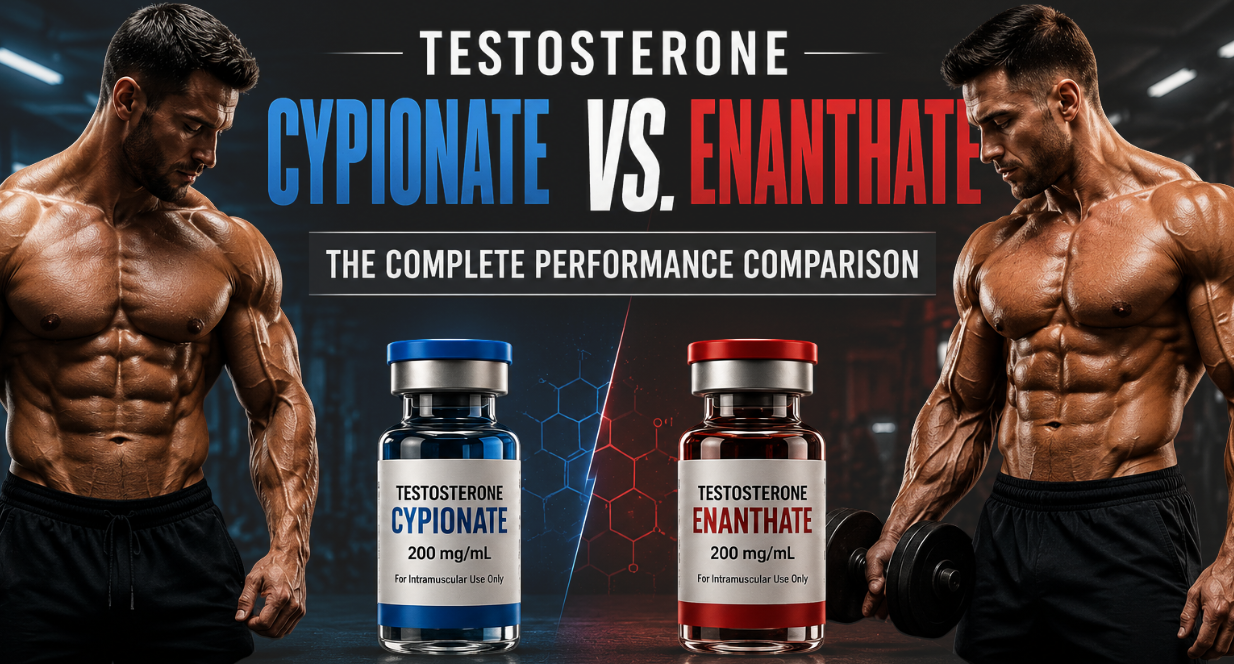
Testosterone Cypionate vs. Enanthate: The Complete Performance Comparison
Created by Etalaze Shop Support, Modified on Fri, 15 May at 7:35 PM by Etalaze Shop Support
Understanding Testosterone and TRT
Testosterone is a vital hormone responsible for many important functions in the body. In men, it plays a major role in muscle growth, bone density, energy levels, libido, mood, and overall physical performance. Although women also produce testosterone, men naturally produce it in much higher amounts.As men age or due to certain medical conditions, testosterone levels may decline below normal ranges. This can lead to symptoms such as fatigue, low sex drive, reduced muscle mass, mood swings, poor recovery, and decreased motivation. Testosterone replacement therapy is designed to restore hormone levels and help improve overall quality of life.
What Is Testosterone Cypionate?
Testosterone cypionate is a long-acting esterified form of testosterone commonly used in TRT protocols. Because of its chemical structure, it remains active in the body for a longer duration after injection.One of the main advantages of testosterone cypionate is its extended half-life, which is approximately 8 days. This allows many patients to inject less frequently, typically every 7 to 10 days depending on their prescribed protocol.
Due to its slower absorption rate, testosterone cypionate provides a gradual and sustained release of testosterone into the bloodstream. Many users appreciate the convenience of fewer injections, especially those with busy schedules or those who prefer a simpler routine.
What Is Testosterone Enanthate?
Testosterone enanthate is another widely used injectable testosterone ester that shares many similarities with cypionate. However, it has a slightly shorter ester chain, which affects how quickly the hormone is released and metabolized.Testosterone enanthate has an average half-life of around 4.5 days. Because of this, injections are generally administered every 5 to 7 days to maintain stable testosterone levels.
Compared to cypionate, enanthate is absorbed somewhat faster into the bloodstream. Some patients and clinicians prefer this option because the slightly more frequent dosing schedule may help maintain steadier hormone levels throughout the week.
Testosterone Cypionate vs. Enanthate: Key Differences
Although both forms deliver the same active hormone, the primary differences lie in their release rate, injection frequency, and individual patient response.Injection Frequency
One of the biggest distinctions between the two is how often injections are needed. Testosterone cypionate typically requires fewer injections because of its longer half-life. For patients who want a more convenient schedule, this can be a major advantage.Testosterone enanthate, on the other hand, usually requires more frequent injections. However, some users feel this allows for smoother hormone stability and fewer fluctuations between doses.
Absorption and Stability
Cypionate releases slightly slower, while enanthate enters the bloodstream somewhat faster. In practice, the differences are relatively minor, but certain individuals may notice differences in energy levels, mood, or symptom control depending on which ester they use.Availability and Cost
Both testosterone cypionate and enanthate are widely available, although regional availability may vary. In some countries, one ester may be more commonly prescribed than the other. Pricing can also differ depending on pharmacy costs and insurance coverage.Individual Response
Every patient responds differently to TRT. While some individuals may feel no noticeable difference between cypionate and enanthate, others may prefer one over the other based on how their body processes the hormone. Finding the right option often requires monitoring and bloodwork.Potential Side Effects
Since both medications contain testosterone, they share similar potential side effects. These may include increased red blood cell count, acne, water retention, cholesterol changes, or sleep apnea risk.Choosing the Right Testosterone Ester
Deciding between testosterone cypionate and testosterone enanthate ultimately depends on personal preference, lifestyle and response to treatment. Some patients prioritize fewer injections, while others prefer more frequent dosing for steadier hormone levels.Final Thoughts
Both testosterone cypionate and testosterone enanthate are effective and reliable options for testosterone replacement therapy. While the differences between them are relatively small, factors such as injection frequency, hormone stability, availability, and individual response can influence which option is best suited for a patient.By understanding how each ester works, patients can make more informed decisions and optimize their TRT experience for long-term results and overall well-being.
Was this article helpful?
That’s Great!
Thank you for your feedback
Sorry! We couldn't be helpful
Thank you for your feedback
Feedback sent
We appreciate your effort and will try to fix the article