BPC-157 has quickly gained popularity as a go-to peptide for healing injuries, supporting gut health, and reducing inflammation. Originally derived from a protective protein found in the stomach, this synthetic compound shows strong potential for helping with everything from tendon repair to regenerating intestinal tissue. Because of its wide-ranging benefits, it's becoming a favorite in the biohacking, athletic recovery, and longevity circles.
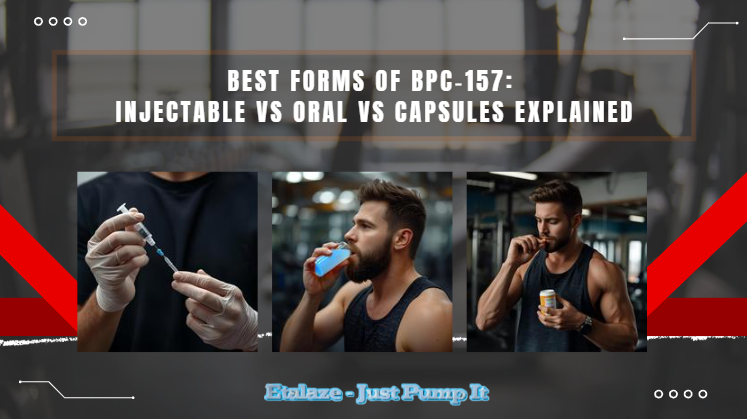
As its popularity grows, so do the options for how it’s used. Today, BPC-157 is available in several forms, including:
Injectable powders
Oral liquid solutions
Capsule-based supplements
Each format offers different strengths, limitations, and use cases. Some products are high-purity, research-grade peptides, while others are lower-dose supplements with minimal evidence to back their effectiveness.
In this guide, we’ll cover:
How injectable, oral, and capsule forms of BPC-157 compare
Which type offers the best absorption and results
How to choose the right form for gut healing, injury repair, or muscle recovery
For a deeper dive into how BPC-157 works, check out our companion article: “What Is BPC-157?”
What Is BPC-157?
BPC-157 stands for Body Protection Compound-157. It’s a synthetic peptide made up of 15 amino acids, modeled after a natural protective protein found in human gastric juices. Unlike many lab-created compounds, BPC-157 mimics a naturally occurring part of the body, which is one reason it’s gained attention in both scientific and athletic fields.
Key Features of BPC-157:
→ Peptide Structure: A short amino acid chain (specifically, a pentadecapeptide) that amplifies the effects of a natural stomach protein.
→ Function: Widely studied for its role in tissue repair, especially in muscles, tendons, and the digestive system.
→ How It Works: Research indicates it supports the formation of new blood vessels (angiogenesis), boosts collagen production, and activates healing pathways at the cellular level.
→ Stability: Unlike many peptides that break down in the digestive system, BPC-157 is stable in stomach acid, which suggests it may also be effective when taken orally.
Why People Use BPC-157
Early research—mostly in animal studies—shows BPC-157 may help with:
→ Tendon and ligament healing – potentially speeding up injury recovery
→ Muscle repair – reducing soreness and improving recovery after workouts
→ Joint support – enhancing collagen production and connective tissue strength
→ Gut healing – lowering inflammation and promoting recovery from ulcers or gut injuries
While the early results are promising, most studies so far have been done in animals. More research in humans is needed before it can be fully embraced in mainstream medicine.
Citation: Vukojević, Jakša, et al. "Pentadecapeptide BPC 157 and the central nervous system." Neural Regeneration Research 17.3 (2022): 482–488.
How BPC-157 Works
BPC-157 promotes healing by activating key biological processes involved in tissue repair, reducing inflammation, and supporting cell regeneration. Unlike compounds that alter hormones, BPC-157 works directly at the injury site, boosting your body’s natural repair systems.
1. Activation of Growth Factors
BPC-157 enhances the action of several growth factors, such as VEGF (vascular endothelial growth factor), TGF-β (transforming growth factor beta), and FGF (fibroblast growth factor). These molecules play a crucial role in forming new blood vessels, producing collagen, and directing cells like fibroblasts to the injury site—all vital steps in tissue repair.
2. Improved Blood Flow via Nitric Oxide
The peptide also helps regulate nitric oxide (NO), which improves blood vessel function. This increases blood flow to damaged areas, reduces oxidative stress, and creates a more favorable environment for healing and inflammation control.
3. Tendon and Ligament Repair
Animal studies show that BPC-157 can speed up the healing of tendons and their attachment to bones. It helps align collagen fibers more effectively and encourages the growth of key repair cells like fibroblasts and tenocytes, supporting stronger tissue regeneration.
4. Gut Healing and Nervous System Protection
Initially studied for digestive issues, BPC-157 has shown impressive effects in repairing the intestinal lining, reducing ulcers, and strengthening gut barrier function. Emerging research also suggests it may protect nerves and aid brain recovery by influencing neurotransmitter pathways involving dopamine and serotonin.
Bottom line: BPC-157 helps repair the body from the inside out, making it especially useful for beginners dealing with joint strain, tendonitis, overuse injuries, or gut problems related to stress or medication.
Citation: Seiwerth, Sven, et al. "BPC 157's effect on healing." Journal of Physiology-Paris 91.3–5 (1997): 173–178.
BPC-157 Form Comparison: Injections vs Oral vs Capsules
Before exploring each form in depth, here’s a quick comparison of the most common ways to take BPC-157. This table summarizes what each form is best suited for, along with its benefits, drawbacks, and how well the body absorbs it.
| Form | Best For | Pros | Cons | Bioavailability |
|---|---|---|---|---|
| Injectable | Tendon/ligament repair, soft tissue injuries | Most effective, direct delivery, full-body benefits | Requires mixing, injections, higher cost | ★★★★★ (Excellent) |
| Oral (Liquid) | Gut health, ulcers, leaky gut | Easy to take, sublingual use improves GI targeting | Lower overall absorption, effects can vary | ★★☆☆☆ (Moderate–Low) |
| Capsule/Pill | General wellness, ease of use | No needles, convenient for daily routines | Poor absorption, may be broken down in digestion | ★☆☆☆☆ (Low) |
Note: Most of the scientific research showing BPC‑157’s healing abilities used injectable versions. While oral and capsule forms are available, they’re less studied and often require higher doses to produce similar results.
Injectable BPC-157
Most effective form, used in research and preferred by advanced users.
How it's used: Subcutaneous or intramuscular injections.
Dose: 250–500 mcg/day.
Pros: Highest bioavailability, direct tissue repair, flexible dosing.
Cons: Requires mixing, injections, higher cost, and careful storage.
Best for: Athletes, injury recovery, post-surgery healing.
Oral BPC-157 (Liquid)
Easier to use, possibly effective for gut-related issues.
How it's used: Sublingual or swallowed.
Dose: 500–1,000 mcg/day.
Pros: No needles, travel-friendly, gut-targeted benefits.
Cons: Limited systemic effects, less research, variable absorption.
Best for: Gut inflammation, IBS, ulcers, users avoiding injections.
BPC-157 Capsules/Pills
Most convenient, but least proven form.
How it's used: Taken orally like a supplement.
Dose: 250–1,000 mcg/day.
Pros: Simple, portable, no prep or injections.
Cons: Very low absorption, questionable effectiveness, unregulated quality.
Best for: Beginners, casual users, or those with mild digestive issues.
Which BPC‑157 Form Is Most Effective?
✔ Best for Injury & Recovery: Injectable
Injectable BPC‑157 offers the highest bioavailability and proven results in tissue repair, joint healing, and post-surgery recovery. It’s the most researched form and ideal for athletes or anyone seeking strong systemic and local effects.
✔ Best for Gut Health: Oral Liquid (Sublingual)
Oral BPC‑157 may help with ulcers, IBS, and gut inflammation. Though less systemically effective, it can support mucosal healing when absorbed through the mouth or digestive tract.
Least Effective: Capsules
Capsule forms are convenient but poorly absorbed and mostly unproven. Many lack proper dosing and may not contain verified BPC‑157.
Legality & Safety
Not FDA-approved but legal to purchase for research use.
Banned by WADA for athletes.
Not regulated, so quality varies widely.
Risks include: underdosed products, low purity, and contamination.
Tip: Only buy from vendors with third-party lab results (Certificate of Analysis).
Side Effects & Use
Generally well-tolerated; rare side effects may include headaches, nausea, or injection site irritation.
No long-term studies exist, so cycling (4–6 weeks on, then off) is recommended.
Bottom Line: Which Should You Use?
Injectable = Best for serious healing and performance
Oral Liquid = Good for digestive issues
Capsules = Low efficacy but convenient for beginners
Quick FAQ
Best for tendon healing? Injectable BPC‑157
Do capsules work? Minimal effect; low absorption
Is oral BPC‑157 good for gut health? Yes, especially sublingual forms
Is it legal? Legal for research, but not FDA-approved or WADA-compliant
How to verify quality? Look for third-party lab testing and transparent labeling
Was this article helpful?
That’s Great!
Thank you for your feedback
Sorry! We couldn't be helpful
Thank you for your feedback
Feedback sent
We appreciate your effort and will try to fix the article